How to Find Cognitive Behavioral Therapy (CBT) Near You: A Local Guide
Searching for cognitive behavioral therapy near me usually means you are ready for some kind of change. Maybe anxiety is taking up too much space in your life. Maybe negative thoughts keep repeating, or you are struggling with behaviors you know are not helping you.
Finding a therapist is an important first step. But finding the right therapist matters just as much.
What Is Cognitive Behavioral Therapy?
Cognitive Behavioral Therapy, or CBT, is a structured form of therapy that looks at the connection between your thoughts, feelings, and behaviors.
You may notice a pattern like:
“I’m going to fail.”
You feel anxious.
You avoid the situation.
Avoiding it makes the fear stronger.
CBT helps you slow that cycle down.
The goal is not to simply replace every negative thought with a positive one. It is to understand whether your thoughts are accurate, useful, or connected to patterns that have developed over time.
How Do I Find CBT Therapy Near Me?
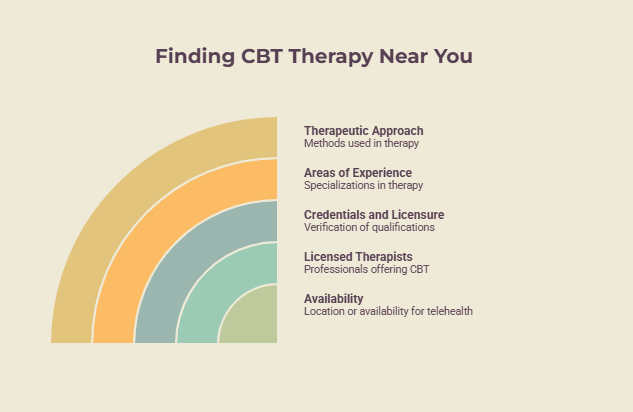
Start by looking for licensed therapists in your area who specifically identify CBT as part of their approach.
You can search for CBT therapy near me through therapist directories, professional associations, or local counseling practices. But do not stop at the first name that appears.
Look at the therapist's:
Credentials and licensure
Areas of experience
Therapeutic approach
Location or availability for telehealth
Experience with the concerns bringing you to therapy
A therapist who works primarily with children, for example, may not be the right fit for an adult dealing with relationship problems or longstanding anxiety.
What Should I Look for in a Cognitive Behavioral Therapist?
Finding a therapist is more personal than finding a service.
I believe therapy works best when you feel both accepted and understood, while also trusting that your therapist has the training and experience to help you. A good therapeutic relationship gives you room to explore difficult thoughts without feeling judged.
When looking for cognitive behavioral therapists near me, ask yourself:
“Do I feel comfortable talking to this person?”
You may also want to ask about their experience treating the specific concern you are dealing with.
The right therapist should be able to explain how they approach your concerns in language you understand.
Does CBT Help with Anxiety and Depression?
Cognitive Behavioral Therapy (CBT) is often used to tackle issues like anxiety and depression. It can also help with patterns involving stress, self-criticism, avoidance, and difficult emotions.
But therapy is not a one-size-fits-all process.
Your therapist should first understand what you are experiencing before deciding what approach makes sense for you.
Sometimes the thoughts you are struggling with are connected to something deeper. Your current anxiety, for example, may be influenced by earlier experiences, relationship patterns, or unresolved trauma.
That history matters.
How Do I Know If a Therapist Is a Good Fit?
This is one of the most important questions to ask.
You might find a therapist who has excellent credentials but still does not feel like the right person for you. That does not mean therapy will not work. It may simply mean you need a different therapeutic relationship.
During an initial conversation, notice whether you feel:
Heard rather than rushed
Respected rather than judged
Comfortable asking questions
Clear about what therapy will involve
Confident that your concerns are being taken seriously
Therapy is a team effort. You should feel that you and your therapist are working together toward your goals.
Is the Best Cognitive Behavioral Therapy Near Me Always the Closest?
Not necessarily.
When people search for the best cognitive behavioral therapy near me, they often focus on distance, reviews, or search rankings.
Those things can help you create a shortlist. They should not make the decision for you.
A therapist who is ten minutes farther away but has experience with your specific concerns may be a better fit than someone who happens to have an office around the corner.
Availability matters, too. If getting to appointments consistently is difficult, ask whether the therapist offers online sessions where appropriate.
The best therapy is often the therapy you can realistically attend and engage with.
What Should I Ask Before My First Appointment?
You do not need to prepare a long list of questions.
A few simple ones can tell you a lot:
1. “Do you work with the concerns I am experiencing?”
2. “What does your approach to CBT look like?”
3. “How do you determine what we should work on first?”
4. “How often do you typically recommend sessions?”
You can also ask about scheduling, fees, insurance, and whether sessions are available online.
There is nothing wrong with asking these questions. In fact, having clarity before beginning can help you feel more comfortable.
What If CBT Does Not Feel Like Enough?
Sometimes you begin therapy expecting one issue to be the problem and discover something deeper underneath it.
For example, anxiety may be connected to childhood experiences. Relationship difficulties may involve attachment patterns. Persistent self-criticism may have developed from years of feeling that you were not good enough.
That does not mean CBT has “failed.”
It may simply mean your therapist needs to understand the larger picture.
A good therapist should be willing to adjust the work as your needs become clearer.
Finding the Right Therapist Takes More Than a Search
Searching for cognitive behavioral therapy near me can give you a list of therapists.
It cannot tell you who will make you feel safe enough to be honest.
Take time to look beyond the label. Consider the therapist's experience, approach, availability, and, perhaps most importantly, whether you feel understood when you speak with them.
You do not need to know exactly what you need before reaching out.
Sometimes you simply know that the way you have been coping is no longer working.
That is enough reason to start looking.
FAQs
What is cognitive behavioral therapy?
Cognitive Behavioral Therapy (CBT) is a systematic therapeutic method that examines the interplay between thoughts, feelings, and actions. It helps you recognize unhelpful patterns and develop more effective ways of responding.
How do I find cognitive behavioral therapists near me?
Search local therapist directories, professional associations, and counseling practices. Then review each therapist's credentials, experience, approach, and areas of specialization before scheduling a consultation.
Is CBT good for anxiety?
CBT can be helpful for many people experiencing anxiety. A therapist can determine whether CBT is appropriate based on your symptoms, history, and goals.
How do I know if a CBT therapist is right for me?
Look for someone whose experience matches your concerns and with whom you feel comfortable being honest. Feeling heard, respected, and understood is an important part of the therapeutic relationship.
Can I do CBT online?
Many therapists offer CBT through online sessions. Ask the therapist whether telehealth is available and appropriate for your situation.
A Final Thought
Finding cognitive behavioral therapy near me is not only about finding someone nearby.
It is about finding a therapist you can trust.
You deserve a therapeutic relationship where you feel accepted, understood, and supported while doing meaningful work. Take your time, ask questions, and remember that finding the right fit is part of the process.
If you are looking for CBT-informed counseling in Minnesota or through virtual therapy, I would be glad to talk with you. You can book a free 30-minute consultation to explore whether Turner Counseling may be the right fit.