10 Couples Therapy Exercises You Can Try
When couples sit in my office, they often expect big breakthroughs. What actually changes relationships are small, repeated behaviors practiced at home. The couples therapy exercises I assign aren’t complicated. They’re structured. Intentional. Sustainable.
Most relationship damage doesn’t happen in one moment. It happens in daily misattunements. These exercises are designed to repair those small disconnects before they become larger fractures.
If you’re willing to practice consistently, these tools can shift how you communicate, respond, and reconnect.
Let me walk you through the ones I use most often.
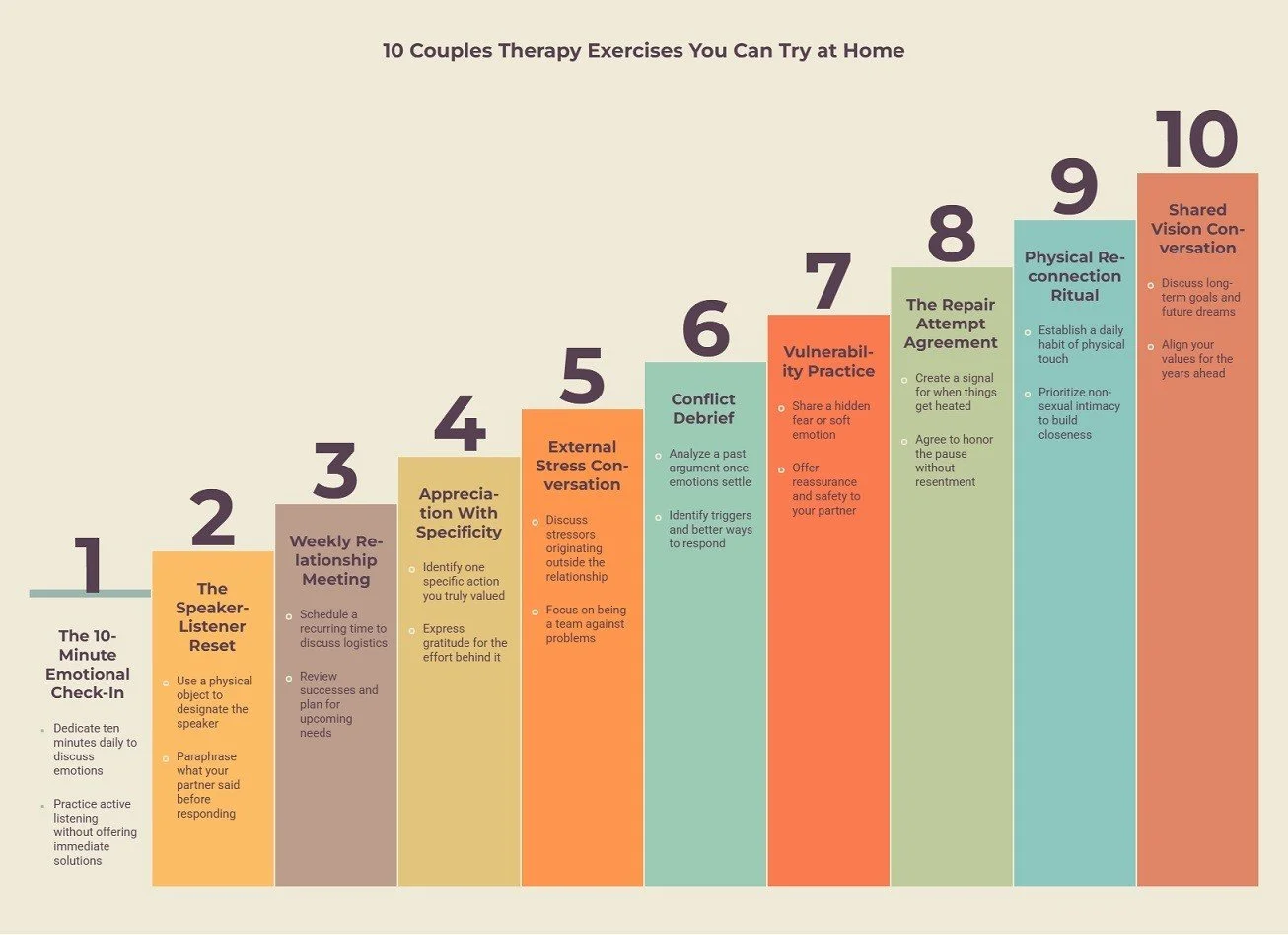
1. The 10-Minute Emotional Check-In
I ask couples to set aside ten minutes daily. Not to problem-solve. Not to debate. Just to share.
Each partner answers:
What felt heavy today?
What felt good?
Is there anything you need from me?
The listener reflects back what they heard before responding.
This builds emotional tracking. Most couples don’t lack love. They lack awareness of each other’s internal world.
Small check-ins prevent emotional distance from quietly growing.
2. The Speaker-Listener Reset
When conversations escalate, structure matters.
One partner speaks for two minutes using “I feel” statements. The other summarizes without defending. Then you switch.
In my experience, this is one of the most powerful communication exercises for couples because it slows the nervous system down. Most arguments aren’t about content. They’re about not feeling heard.
It feels mechanical at first. Stay with it. Structure creates safety.
3. Weekly Relationship Meeting
I recommend a 20-minute weekly meeting. You need to give it your all, without distractions.
Here’s what you can discuss:
What worked this week?
Where did we disconnect?
Is there unresolved tension?
Keep it focused and contained.
Couples who consistently do this rarely let resentment accumulate. If you’re unsure whether your relationship patterns are deeper than surface conflict, reviewing the signs you need couples therapy can help you assess that honestly.
4. Appreciation With Specificity
Many distressed couples stop noticing what’s working.
Once a week, name three specific behaviors you appreciated. Not personality traits. Actions.
"I noticed you refilled my coffee this morning without me asking" or "I appreciate how patient you were when I was venting about my sister."
The receiving partner just listens and lets it in without deflecting with "oh, it was nothing," no reciprocating yet, just receiving. Then switch.
I've watched this exercise bring couples to tears because they'd forgotten there was still genuine fondness beneath their conflicts. When you do this regularly, you start noticing positive things throughout the week specifically to share during your next flood.
5. External Stress Conversation
I often see couples only talk about logistics or conflict.
Instead, spend 15 minutes sharing outside stress. Work. Family. Health.
The rule is simple:
No fixing.
No turning it into relationship critique.
Just listening.
Friendship buffers relationships during stress. This exercise rebuilds that foundation.
6. Conflict Debrief
Within 24 hours of an argument, revisit it calmly.
Ask:
What triggered me?
What was I protecting?
What could I own?
This isn’t about rehashing. It’s about understanding the pattern.
When couples start identifying their escalation cycle, change becomes possible. If fights feel repetitive and intense despite effort, that’s often when people begin wondering if couples counseling is worth it, and the answer usually depends on whether patterns are being addressed directly.
7. Vulnerability Practice
I guide couples through prompts like:
“When I pull away, it’s usually because…”
“One insecurity I rarely share is…”
The listening partner responds with curiosity.
Vulnerability is uncomfortable. That discomfort is normal. Emotional intimacy grows when fear is met with steadiness rather than correction.
This is one of the most transformative relationship exercises I assign.
8. The Repair Attempt Agreement
Every couple fights. What matters is repair.
Agree on simple phrases that signal a pause:
“Can we reset?”
“That came out wrong.”
“I’m feeling flooded.”
Then agree to honor those attempts.
In my clinical experience, relationships don’t collapse because of conflict. They erode when repair attempts are ignored.
9. Physical Reconnection Ritual
Stress reduces touch.
I've noticed that couples often lose non-sexual physical touch when relationship stress increases, and that loss accelerates disconnection. So, one most important couples therapy exercises I recommend is to choose a daily ritual like:
· A 6-second kiss when you reunite after work
· A 5-minute cuddle before sleep
· Holding hands during your evening walk
The duration matters less than the consistency and presence. You're not checking your phone during the cuddle or thinking about tomorrow's schedule during the kiss.
You're fully present with each other, reconnecting through physical closeness without pressure for it to lead anywhere.
This is particularly important for couples whose primary love language is physical touch but who've stopped touching except during conflict discussions or obligatory pecks goodbye.
10. Shared Vision Conversation
Once a month, ask:
What kind of partnership are we building?
What values matter most to us?
How do we want to handle stress together?
Write your answers separately. Then compare.
When couples reconnect with shared direction, small disagreements feel less threatening.
This exercise works especially well alongside structured couples therapy, where goals are clarified and reinforced over time.
When Home Practice Isn’t Enough
These couples therapy exercises create meaningful change when practiced consistently. But sometimes couples feel stuck despite effort.
If patterns include chronic contempt, repeated betrayal, or complete shutdown, structured guidance may be necessary. That’s when many couples begin exploring whether professional support could help reset deeper cycles.
Exercises build skill. Therapy builds accountability and deeper insight.
FAQs
What exercises do you do in couples therapy?
I use structured communication tools, appreciation practices, conflict debriefs, and vulnerability prompts. Each exercise targets a specific relational pattern.
What is the Gottman 6-hour rule?
It’s a weekly framework encouraging small, consistent connection rituals throughout the week rather than relying on occasional big gestures.
What are some intimacy exercises?
Vulnerability prompts, sustained eye contact, physical affection rituals, and structured emotional check-ins all strengthen intimacy.
How often should couples practice these?
Brief daily or weekly consistency works best. Repetition matters more than intensity.
Can exercises replace therapy?
They can improve healthy relationships. Deeply entrenched patterns often require professional structure to shift sustainably.
Final Thoughts
Healthy relationships are never built on grand gestures. They are built on small, consistent behaviors repeated over time.
These couples therapy exercises are tools I’ve seen create steady change when both partners are willing to practice. Start with one. Keep it simple. Stay consistent.
If you reach a point where home practice feels insufficient, structured support may help clarify and stabilize the path forward. My counseling practice helps couples identify which exercises will most benefit their specific patterns and provides accountability for actually implementing them between sessions.
So, reach out to make steady efforts and change your relationship.