How to Rebuild Trust After Cheating: 8 Therapist-Recommended Steps
If you’re searching for how to rebuild trust after cheating, you’re likely in the middle of shock, anger, or deep confusion. Infidelity completely disrupts loyalty. It shakes emotional safety, shared history, and future plans.
Many couples wonder whether trust can ever feel solid again. The answer is nuanced. Rebuilding trust after infidelity is possible, but it requires structure, consistency, and emotional honesty from both partners. Relationship recovery does not happen through promises alone.
It unfolds through repeated actions that demonstrate accountability and rebuild safety over time.
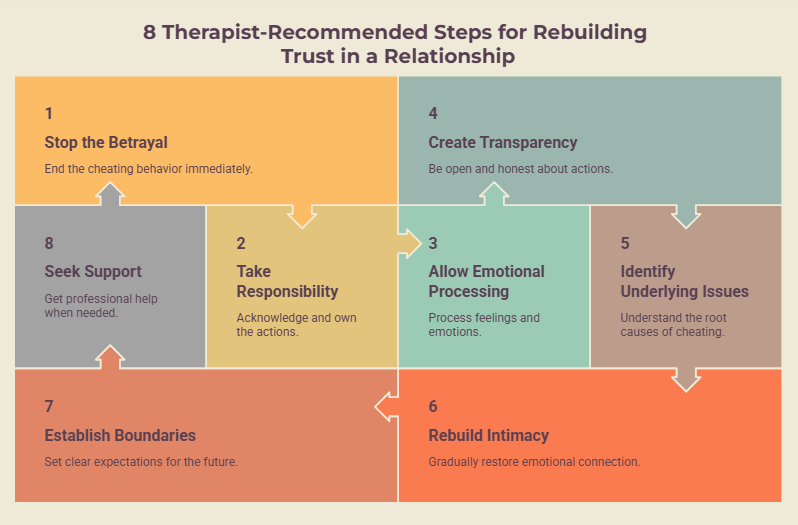
1. Stop the Betrayal Completely
Trust cannot begin to rebuild while the betrayal continues in any form.
This includes ending contact with the third party, removing secrecy, and eliminating behaviors that blur boundaries. Partial transparency keeps wounds open.
Rebuilding trust after infidelity requires a clean break. Without it, conversations about repair become hollow.
The unfaithful partner must show through behavior, not words, that the affair is over.
2. Take Full Responsibility
Defensiveness slows healing.
Statements like “It didn’t mean anything” or “You pushed me away” intensify damage. Accountability means acknowledging the choice clearly without shifting blame.
Healthy ownership includes:
A direct apology
Validation of the hurt partner’s pain
Willingness to answer questions honestly
Patience with repeated emotional reactions
If you’re asking how to rebuild trust after cheating, accountability is the first non-negotiable step.
3. Allow Emotional Processing
The betrayed partner often needs to ask questions repeatedly. This is not about punishment. It is about understanding.
Rebuilding trust after infidelity requires space for anger, grief, and confusion. Suppressing these emotions delays healing.
The unfaithful partner must tolerate discomfort without demanding quick forgiveness.
Relationship recovery depends on emotional honesty, not avoidance.
4. Create Radical Transparency
Transparency reduces uncertainty.
This may involve sharing passwords, clarifying schedules, or proactively communicating changes in plans. Transparency is not permanent surveillance. It is a temporary bridge to restore security.
Examples include:
Voluntarily sharing whereabouts
Disclosing unexpected contact
Being open about social interactions
Checking in consistently
Learning to rebuild trust in a relationship typically requires gradual transparency until the anxiety lessens over time.
5. Identify the Underlying Issues
Infidelity is a choice. It is not caused by a single argument or unmet need. Still, understanding relational dynamics matters.
Couples may explore:
Emotional disconnection
Communication breakdown
Avoided conflict
Unresolved resentment
Addressing these patterns prevents repetition. If you’re unsure whether repair is realistic, know that the work is difficult, but couples counseling can absolutely help when both partners are genuinely committed to the healing process.
6. Rebuild Emotional Intimacy Gradually
Physical closeness may feel complicated after betrayal.
Emotional intimacy must come first. This includes:
Sharing daily experiences
Expressing vulnerability
Engaging in structured conversations
Reintroducing shared rituals
Rebuilding trust after infidelity is not about rushing back to “normal.” It is about creating a healthier version of connection.
Couples often need guidance to navigate this phase effectively.
7. Establish Clear Boundaries Moving Forward
Healing requires new agreements.
Boundaries might involve social media usage, friendships with former partners, or travel communication.
The key is mutual agreement rather than imposed control.
When couples ask how to rebuild trust after cheating, they often overlook the importance of proactive boundaries. Clear expectations reduce ambiguity and anxiety.
8. Seek Structured Support When Needed
Infidelity is one of the most emotionally intense relational injuries. Professional guidance can help regulate conversations and prevent escalation.
Structured couples therapy provides:
Neutral facilitation
Tools for emotional regulation
Communication frameworks
Accountability planning
If you’re questioning whether counseling makes a difference, exploring my perspective on does couples counseling work may provide reassurance.
Relationship recovery is rarely linear. External support often accelerates clarity and healing.
Accept That Healing Takes Time
There's no standard timeline for how to regain trust in a relationship after cheating. Some couples notice significant healing within six months. Others need a year or more before trust feels even partially restored. Pushing for faster healing only slows the process.
The injured partner will have hard days even after months of progress. Anniversaries, triggers, random intrusive thoughts, they all bring the pain back. This doesn't mean healing isn't happening. It means trauma recovery isn't linear.
The unfaithful partner needs patience with this reality. Getting frustrated with the injured partner's continued pain or questioning why they "can't just move on" demonstrates a lack of understanding about the depth of the wound infidelity creates.
Signs That Healing Is Progressing
Difficult conversations happen without spiraling into destructive fights
The injured partner has periods where they're not actively thinking about the affair
Physical and emotional intimacy gradually increase
Both partners can envision a future together
Triggers become less frequent and less intense over time
FAQs
Can trust be fully restored after cheating?
Yes, but it requires time and persistent effort. Full restoration depends on accountability, transparency, and emotional processing from both partners.
What are the 7 steps to rebuild trust?
Core steps include ending the affair, taking responsibility, allowing emotional processing, creating transparency, addressing underlying issues, rebuilding intimacy, and setting boundaries.
Can a relationship go back to normal after cheating?
The connection seldom goes back to how it was before. Through dedicated effort, it has the potential to develop into a more positive and stable relationship.
Can a relationship survive when trust is broken?
Many relationships survive broken trust when both partners commit to structured repair and behavioral change.
How long does it take to rebuild trust?
There is no fixed timeline. Some couples notice improvement within months, while deeper repair may take a year or longer.
The Hard Truth About Rebuilding Trust
If you’re still wondering how to rebuild trust after cheating, know that recovery is possible but demanding. It requires consistent transparency, emotional patience, and structured effort.
Rebuilding trust after infidelity is not about quick forgiveness. It is about steady, repeated demonstrations of reliability and care. Relationship recovery unfolds through accountability and renewed emotional safety.
Turner Counseling LLC provides specialized support for couples dealing with infidelity recovery. The work is painful, the timeline is long, and success isn't guaranteed. But for couples genuinely committed to healing, professional guidance provides the structure and skills that make rebuilding possible.
The question isn't whether trust can be rebuilt after cheating. The question is whether both of you are willing to do what rebuilding actually requires.