Is Marriage Counseling Worth It? What Couples Should Consider
When a marriage feels strained, one practical question quickly follows: is marriage counseling worth it? Sessions can cost $150–$300 each. Weekly appointments add up. There’s no guaranteed outcome. It’s reasonable to pause before committing.
But the real comparison isn’t just the therapy fee. It’s the emotional, financial, and long-term cost of staying stuck versus investing in change. Marriage therapy is not a promise to save every relationship. It is a structured opportunity to understand patterns, rebuild connection, or gain clarity about next steps.
What’s the Financial Reality of Marriage Counseling
Let’s look at numbers first.
Marriage therapy often costs a few hundred dollars per session. Over several months, that can total several thousand dollars. That’s significant.
Now compare that to divorce. Legal fees alone often reach $15,000–$50,000 depending on complexity. Add the cost of two households, potential custody disputes, and long-term financial adjustments. From a purely financial standpoint, relationship counseling is usually far less expensive than separation.
Marriage counseling benefits aren’t just financial, though. Chronic conflict affects physical health, work performance, and children’s emotional stability. Those costs accumulate quietly over time.
What Research Says About Effectiveness
If you’re asking is marriage counseling worth it, you likely want evidence.
Research consistently shows that about 70% of couples report improvement after structured marriage therapy. Outcomes improve when therapists use evidence-based approaches, and both partners participate actively.
If you’re wondering more broadly about outcomes, discussions around does couples counseling work highlight that success depends on timing, engagement, and willingness to examine personal patterns.
Marriage counseling benefits are strongest when couples address issues before contempt or emotional withdrawal becomes entrenched.
Why Clinical Marriage Therapy Methods Matter
The quality of your experience depends heavily on the approach your clinician takes. I utilize specialized marriage counseling techniques that are grounded in clinical research. By using a structured framework, we avoid the trap of just "venting" about our week. We focus on the underlying emotional bonds that dictate how you interact.
If you have tried therapy before and felt it wasn't a good fit, you might still be asking is marriage counseling worth it. I understand that skepticism. However, modern approaches like the Gottman Method or EFT have very high success rates because they address the biological and emotional roots of connection.
American Association for Marriage and Family Therapy found that couples who engage in therapy report high levels of satisfaction with the progress they make. My role is to act as a guide through the hard conversations, ensuring that both voices are heard.
When you have a professional advocate for the relationship, it becomes much easier to see a way forward that you couldn't find on your own.
What You’re Actually Paying For
Marriage therapy isn’t just guided conversation. You’re investing in structured skills.
Effective couples therapy teaches practical strategies such as:
Interrupting escalating conflict cycles
Expressing needs without blame
Recognizing defensiveness and shifting it
Making repair attempts during disagreements
Building intentional connection rituals
These tools come from researched marriage counseling techniques designed to change interaction patterns, not just reduce tension temporarily. When couples apply these skills between sessions, progress accelerates.
When Counseling Is Worth the Investment
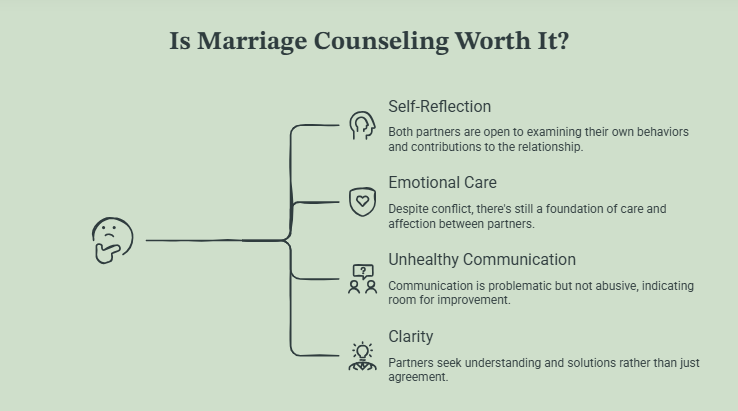
Marriage counseling is most valuable when:
Both partners are willing to self-reflect
There is still emotional care beneath conflict
Communication patterns are unhealthy but not abusive
You want clarity, not just validation
If both people show up ready to examine their role in the dynamic, marriage therapy often provides strong return on investment.
On the other hand, therapy may not be effective if one partner has fully disengaged or is attending only to satisfy external pressure.
What Does Success Look Like in Marriage Counseling
Success doesn’t always mean staying married. Sometimes relationship counseling helps couples repair and strengthen intimacy. Other times it helps them separate respectfully, reducing hostility and long-term damage.
Marriage counseling benefits often include:
Greater self-awareness
Improved co-parenting communication
Reduced resentment
Closure and clarity
Healthier patterns in future relationships
Even when a marriage ends, therapy can prevent a destructive divorce process.
What Undermines the Marriage Counseling Process
Marriage therapy is not a courtroom. It’s not about proving who is right. It becomes ineffective when:
One partner refuses accountability
Sessions are used to attack rather than understand
There is ongoing abuse
Addiction or untreated mental health conditions require individual focus first
Timing also matters. Beginning therapy during extreme external crises may delay deeper relational work until stability returns.
If you’re still wondering is marriage counseling worth it, ask whether both of you are ready to engage honestly.
Questions to Help You Decide When You Need Couples Therapy
Before committing, consider:
Do we still value the relationship beneath the conflict?
Are we willing to examine our own behaviors?
Have we tried structured tools before?
Would we regret not trying therapy?
Clarity matters more than perfection. Marriage therapy works best when both partners prioritize understanding over winning.
Frequently Asked Questions
What is the success rate of marriage counseling?
Research shows roughly 70% of couples report improvement after structured marriage therapy. Outcomes depend on commitment and timing.
Does marriage counseling work?
Yes, for many couples it does. It works best when both partners actively participate and practice skills outside sessions.
What not to say during marriage counseling?
Avoid using absolutes like “you always” or “you never,” and avoid attacking character instead of addressing behavior. Therapy works best when communication remains respectful.
What are the four habits that destroy marriages?
Criticism, contempt, defensiveness, and stonewalling are widely recognized as destructive patterns that predict divorce if left unaddressed.
How long does marriage counseling take?
Some couples see improvement within 8–12 weeks. More complex issues may require several months or longer depending on severity and engagement.
Take the Next Step with Turner Counseling LLC
You don't have to keep living in a relationship that feels draining or lonely. I am ready to provide the clinical expertise and the compassionate support you need to answer the question, is marriage counseling worth it, for your own life.
I invite you to take the first step today. Contact Turner Counseling LLC to schedule your free 30-minute consultation. Let’s work together to help you find the connection and the joy you have been searching for.