What Is Premarital Counseling? Everything Engaged Couples Should Know
Most engaged couples spend months choosing venues, flowers, and seating charts. Very few spend the same energy preparing for the actual marriage. In my experience, that's where the disconnect starts.
So, what is premarital counseling, and why are more couples treating it as essential rather than optional? It's structured therapy I use to help you and your partner build the skills, understanding, and shared framework that a lasting marriage actually requires. Not because something is wrong. Because you want to get it right.
Why More Couples Are Choosing Premarital Therapy Before the Wedding
There's a lingering assumption that therapy is something you seek when things fall apart. Premarital therapy flips that narrative entirely. You're not repairing damage. You're building infrastructure before you move in.
Current tracking by DivorceWriter estimates that about 41% to 42% of first marriages actually end in divorce. In my work, I've seen that the most common reasons aren't dramatic betrayals.
Most of the couples' problems tend to fall into a few recurring categories:
Communication breakdowns that were never addressed
Financial disagreements neither partner talked through
Misaligned expectations about the shape of married life
Unresolved personal patterns each person carried in
Premarital counseling exists specifically to surface those issues while they're still manageable.
Think about it this way. You wouldn't launch a business with someone without discussing roles, finances, and long-term vision. A marriage deserves at least that level of intentional planning.
What Actually Happens in a Premarital Counseling Session
If you've never been to therapy before, the unknown can feel intimidating. Here's what the process typically looks like when you work with me.
The first session usually focuses on understanding your relationship history. How did you meet? What drew you together? What has conflict looked like so far? I begin by identifying the patterns already present in your relationship, because patterns that seem small during the engagement phase tend to intensify under the pressures of married life.
From there, sessions move into specific topic areas. These aren't random conversations. They're guided discussions around the subjects that research consistently links to marital satisfaction or breakdown.
Common Areas I Explore in Marriage Preparation Counseling
Communication styles and how each partner handles conflict
Financial values, spending habits, and expectations around money
Family-of-origin dynamics and how they shape your assumptions about marriage
Intimacy and emotional connection
Faith spiritual values, and how they influence your shared life
Division of responsibilities and household expectations
Children parenting philosophies, and timeline discussions
What makes this different from a casual conversation at dinner is the structure. I help you navigate these topics with tools and frameworks rather than letting them devolve into arguments or avoidance.
What's the Purpose Behind Premarital Counseling
Couples often ask me, “What is premarital counseling? Is it about fixing problems or preventing them?” Honestly, it's neither in the simplest sense.
The premarital counseling is for alignment.
Two people come into a marriage with entirely different lived experiences, family models, communication habits, and unconscious expectations. You might agree on the big things and still be miles apart on what "quality time" means, how to handle disagreements with in-laws, or what financial security looks like.
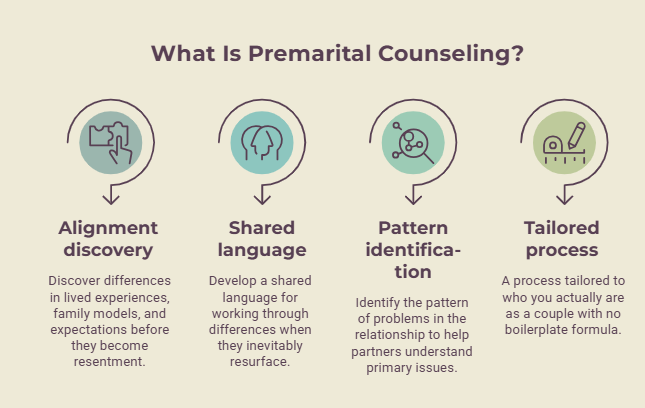
Marriage preparation counseling gives you a space to discover those differences before they become sources of resentment. It also gives you a shared language for working through them when they inevitably resurface.
This aligns closely with how I approach couples therapy more broadly. My method begins with identifying the pattern of problems in the relationship, helping both partners understand the primary issues, and then working through them together. There's no boilerplate formula. I tailor the process to who you actually are as a couple.
For couples who share a faith background, I can also integrate spiritual values into the conversation. This isn't about imposing a framework. It's about honoring what already matters to you and examining how those beliefs will shape your marriage practically, not just philosophically.
When Premarital Counseling Works Best
Timing matters more than most couples realize.
Starting too close to the wedding means you're already deep in logistical stress and emotionally stretched. Starting too early, before the engagement feels real, can make the conversations feel abstract.
I generally recommend beginning couples counseling before marriage, approximately four to six months before the wedding date. That window gives you enough sessions to explore meaningful topics without rushing, and enough distance from the ceremony itself to process what comes up.
That said, there's no wrong time to start. Some couples come to me before they're officially engaged because they want clarity before making the commitment. Others come in a few weeks before the wedding because a specific concern surfaced. Both are valid.
| Timing | Best For |
|---|---|
| 6+ months before | Deep exploration of values, goals, and family dynamics |
| 3–6 months before | Focused work on communication, conflict, and expectations |
| Less than 3 months | Addressing a specific concern or building quick alignment |
What Premarital Counseling Is Not
It's worth naming what this process doesn't do, because unrealistic expectations can undermine the experience.
Premarital counseling is not a guarantee that your marriage will succeed. It's not a place where I take sides or tell you whether to go through with the wedding. It's not a single conversation that resolves everything permanently.
What it is, consistently, is a structured opportunity to practice the skills that healthy marriages depend on. Listening without defensiveness. Expressing needs without blame. Understanding your partner's perspective even when it differs from your own.
Those skills don't come naturally to most people. They're learned. And learning them before marriage gives you a significant head start.
How It Connects to Individual Growth
One thing that often surprises couples is how much premarital therapy reveals about each person individually.
You might discover that your conflict avoidance traces back to how your family handled disagreements when you were young. Your partner might realize that their anxiety around money isn't really about the budget, but about a deeper fear of instability.
This is where individual counseling becomes relevant. Sometimes the most productive thing you can do for your marriage is address your own patterns separately, building confidence, working through anxiety, or examining beliefs about identity and purpose. The healthier you are individually, the more you bring to the partnership.
My whole approach reflects this directly. Personal healing leads to a healthier self, which leads to healthier relationships. If you want a closer look at the specific advantages this work offers, my breakdown of premarital counseling benefits covers them in detail.
FAQs
What happens in premarital counseling?
Sessions are guided conversations with a licensed therapist covering topics like communication, finances, intimacy, family expectations, and conflict resolution. I help you identify existing relationship patterns and develop practical skills for navigating married life together.
What is the purpose of premarital counseling?
The core purpose is to create alignment between partners before marriage. It helps you surface differences in expectations, values, and communication styles so you can address them proactively rather than reactively after the wedding.
When should you start premarital counseling?
I recommend beginning four to six months before the wedding. This allows enough time for meaningful exploration without the pressure of an approaching ceremony. However, starting earlier or later can still be valuable depending on your specific needs.
Is premarital counseling only for couples with problems?
No. Most couples I work with have strong, healthy relationships. They choose therapy because they want to be intentional about building a foundation that lasts, not because something is broken.
How many sessions does premarital counseling usually take?
The number varies based on the couple and the topics covered. Most couples complete between four and eight sessions, though some continue longer if they're working through more complex family dynamics or individual concerns.
Start Your Marriage with Intention
The wedding is one day. The marriage is everything after it.
If you're engaged and want to build your relationship on something more solid than good intentions, I'd be glad to talk with you and your partner.
You can reach out for a free 30-minute consultation with me, Cathy Rupnow, MA, LMFT, at Turner Counseling, and we'll start the conversation that matters most.