When to See a Therapist: 7 Subtle Signs It’s Time to Seek Help
Many people wait to seek therapy until life feels unmanageable. They imagine they need a major crisis, a diagnosis, or a clear explanation for why they are struggling. In my work, I regularly meet people who have been carrying stress, grief, anxiety, or relationship strain quietly for a long time.
Knowing when to see a therapist is not always about reaching a breaking point. It can be about noticing that you do not feel like yourself, that a pattern keeps repeating, or that life feels heavier than it should. Therapy offers a place to comprehend what is happening and decide what support may help.
When Should You See a Therapist? A Quick Answer
You may benefit from therapy when your thoughts, emotions, relationships, work, sleep, or daily routines feel consistently harder to manage. You do not need to wait until symptoms become severe.
I encourage people to consider therapy when a concern has lasted for several weeks, keeps returning, affects important parts of life, or feels difficult to carry alone. A therapist can help you make sense of the pattern and develop healthier ways to respond.
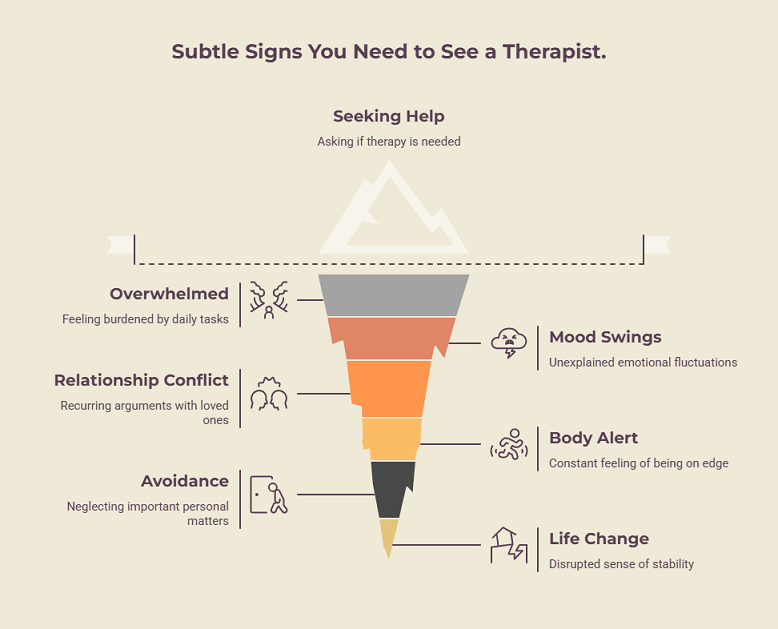
1. You Feel Overwhelmed by Everyday Life
Stress is part of being human. Yet there is a difference between a demanding week and feeling as though every responsibility requires more energy than you have.
You may notice that simple decisions feel draining. A full inbox makes you anxious. You keep putting off errands, calls, or tasks that used to feel manageable. You might tell yourself that you simply need to get organized, but the pressure does not ease.
These can be valid reasons to see a therapist, especially when stress begins affecting your mood, relationships, physical health, or ability to rest.
In individual counseling, I help clients look beyond the immediate to-do list. Sometimes overwhelm is tied to perfectionism, anxiety, burnout, grief, unprocessed experiences, or difficulty setting boundaries.
2. Your Mood Has Changed, and You Cannot Explain Why
You do not always need a clear reason for feeling down, irritable, numb, or on edge. Sometimes a mood change is the first sign that something needs attention.
Maybe you no longer enjoy things that usually matter to you. You feel disconnected while spending time with people you love. You are more impatient than usual, or you find yourself crying more easily. These shifts deserve compassion rather than criticism.
The National Institute of Mental Health notes that persistent changes in mood, energy, sleep, appetite, or interest in activities can be associated with depression and other mental health concerns. A therapist can help you explore what may be contributing without assuming there is one simple explanation.
3. You Keep Having the Same Relationship Conflict
Many people come to therapy because they are tired of repeating the same argument. The topic may change, but the emotional outcome feels familiar. One person withdraws. The other presses for connection. Both leave the conversation feeling unheard.
When this happens, I look beyond the argument itself. The goal is to understand the pattern between you. Often, each partner is trying to protect something important, even if their approach creates more distance.
If relationship tension has become a regular part of your life, couples therapy can provide a guided space to improve communication, emotional connection, trust, and understanding.
4. Your Body Feels Like It Is Always on Alert
Mental and emotional strain can show up physically. You may experience trouble sleeping, a tight chest, headaches, stomach discomfort, muscle tension, fatigue, or a racing mind at night.
Physical symptoms can have many causes, so it is important to talk with a medical provider about new, severe, or concerning symptoms. At the same time, chronic stress and anxiety can affect the body in very real ways.
Signs that stress may be taking a toll include:
Difficulty falling asleep or staying asleep
Feeling restless even during downtime
Constantly anticipating something going wrong
Struggling to relax without feeling guilty
Becoming easily startled, frustrated, or emotionally flooded
For clients whose current distress is connected to difficult experiences from the past, I may discuss trauma-informed options such as CBT or ART when clinically appropriate. These approaches can be useful parts of a personalized treatment plan.
5. You Are Avoiding Something That Matters to You
Avoidance can feel protective in the moment. You may avoid a conversation because you fear conflict. You may delay a decision because making the wrong choice feels scary. You may stay busy because quiet moments bring up emotions you would rather not feel.
Over time, avoidance can make life smaller.
This is often one of the quieter reasons to see a therapist. From the outside, you may appear to be functioning well. Internally, you may feel stuck, disconnected from yourself, or unable to move toward what you want.
Therapy can help you understand what avoidance is trying to protect you from and find a pace for facing difficult emotions that feels manageable.
6. A Major Life Change Has Shaken Your Sense of Stability
Not every reason for therapy is negative. Engagement, marriage, parenthood, career growth, moving, retirement, and changes in faith can all bring complicated emotions.
Even positive transitions ask you to adapt. They can raise questions about identity, purpose, boundaries, relationships, and the future.
I often tell clients that feeling unsettled during change does not mean they are ungrateful or making the wrong choice. It may simply mean that the transition is significant.
For engaged couples, premarital counseling can offer a thoughtful space to discuss communication, finances, family expectations, faith, and the life you hope to build together.
7. You Keep Asking, “Do I Need to See a Therapist?”
If you have repeatedly wondered, “do I need to see a therapist?” it may be worth listening to that question with curiosity.
It does not automatically mean something is seriously wrong. It may mean a part of you wants support, clarity, or a place to speak honestly without worrying about burdening someone else.
You do not need to prove that your pain is serious enough. Therapy is not reserved for people in crisis. It is also a place for personal growth, healthier relationships, and a deeper understanding of yourself.
How Often Should You See a Therapist?
There is no universal schedule. When clients ask how often to see a therapist, I consider their goals, current stress level, history, practical availability, and the kind of support they need.
Weekly sessions are common when someone is beginning therapy or working through an active concern. Some clients shift to every other week as they build momentum. Others may return periodically during a stressful season or life transition.
The right frequency should feel supportive and realistic. We can revisit it as your needs change.
FAQs
How do I know when to see a therapist?
Consider therapy when emotional distress, anxiety, low mood, relationship conflict, grief, stress, or past experiences are affecting your daily life. You can also seek therapy when you want support through a transition or want to understand recurring patterns.
Do I need to see a therapist if I am still functioning at work and home?
You may still benefit from therapy. Many people continue meeting responsibilities while feeling anxious, exhausted, disconnected, or emotionally overwhelmed. Functioning does not mean you have to handle everything alone.
How often should you see a therapist?
Many people start with weekly therapy sessions. The frequency can change based on your goals, symptoms, schedule, and progress. Your therapist should work with you to create a plan that fits your needs.
Is therapy only for people with mental health diagnoses?
No. Therapy can support people with or without a diagnosis. Clients often seek counseling for stress, relationship concerns, confidence, life changes, grief, faith questions, and personal growth.
What should I talk about in my first therapy session?
You can begin with what feels most pressing right now. You might share what brought you in, how long you have felt this way, what you hope will change, and any concerns about the therapy process. You do not need to have everything organized before you begin.
You Do Not Have to Wait for a Crisis
Knowing when to see a therapist often comes down to recognizing that something in your life needs more care than you can give it alone. You may be struggling with a clear concern, or you may simply know that you want to feel more grounded and connected.
I believe personal healing can support a healthier sense of self and healthier relationships. If you are ready to explore what support could look like, you can schedule a free 30-minute conversation with me at Turner Counseling.