What Is the Best Treatment for Anxiety? Comparing Your Options
When anxiety starts controlling your life, keeping you awake at night, making your chest tight during normal activities, or stopping you from doing things you used to enjoy, you want answers fast. Specifically, what is the best treatment for anxiety that will actually help you feel normal again?
The frustrating truth is there's no single "best" approach that works for everyone, but there are several evidence-based anxiety treatment options that produce real results. Understanding what's available can help you make informed choices about what might work for your specific situation.
Cognitive Behavioral Therapy
If you ask most mental health professionals what is the best treatment for anxiety, many will point you toward Cognitive Behavioral Therapy. CBT for anxiety has decades of research supporting its effectiveness, and it works by targeting the thought patterns and behaviors that fuel anxious feelings.
Here's how it actually works: anxiety often involves catastrophic thinking. Your mind jumps to worst-case scenarios, interprets neutral situations as threatening, and overestimates danger while underestimating your ability to cope. CBT helps you identify these distorted thought patterns, examine the evidence for and against them, and develop more balanced perspectives.
But CBT isn't just about thinking differently. The behavioral component involves gradually facing situations you've been avoiding. If social anxiety has you declining invitations, CBT creates a step-by-step plan to slowly re-engage with social situations. This exposure work teaches your brain that what you fear isn't as dangerous as it feels.
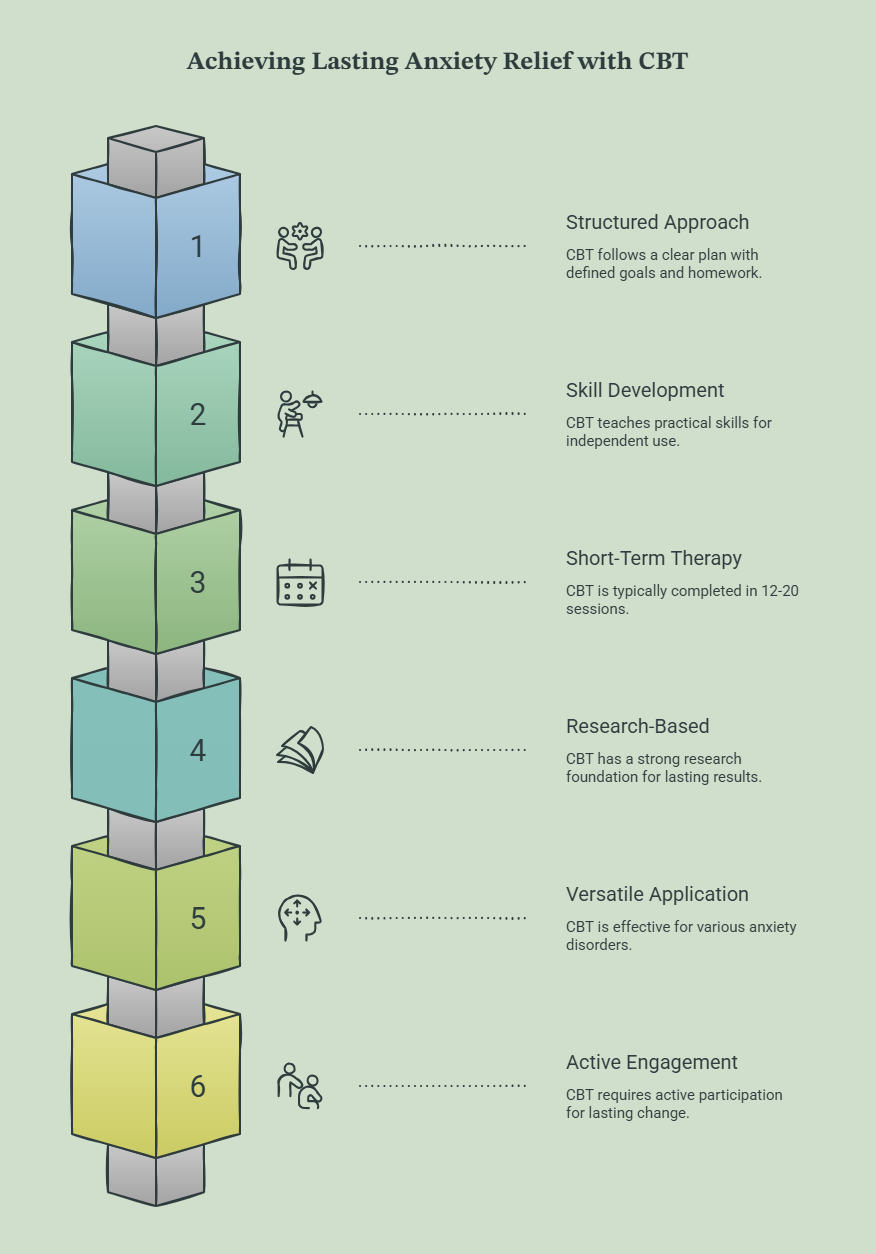
What Makes CBT for Anxiety Effective
Structured approach with clear goals and homework between sessions
Teaches concrete skills you can use independently after therapy ends
Relatively short-term compared to other approaches (often 12-20 sessions)
Strong research base showing lasting results even after treatment ends
Works for multiple anxiety disorders including generalized anxiety, social anxiety, and panic disorder
The main limitation is that CBT requires active participation. You'll have homework assignments, thought records to complete, and situations to gradually face. If you're looking for a passive approach where you just show up and talk, CBT might feel demanding. But that active engagement is precisely why it produces lasting change.
Mindfulness and Acceptance-Based Approaches
Not all anxiety treatment options focus on changing or eliminating anxious thoughts. Acceptance and Commitment Therapy (ACT) and mindfulness-based approaches work differently, they teach you to change your relationship with anxiety rather than fighting it.
The paradox is that trying to eliminate anxiety often makes it worse. When you're terrified of feeling anxious, the first flutter of worry triggers panic about the panic. Mindfulness teaches you to notice anxious thoughts and sensations without judgment, letting them exist without needing to fix or fight them.
This doesn't mean passive resignation. It means recognizing that anxiety is uncomfortable but not dangerous, and you can take meaningful action even while feeling anxious. You learn to unhook from anxious thoughts rather than getting tangled in whether they're true or how to make them stop.
Mindfulness-based approaches include:
Regular meditation practice to build awareness of thoughts and sensations
Learning to observe anxiety without reacting to it
Clarifying your values and taking action aligned with them despite anxiety
Developing "psychological flexibility," the ability to be present with discomfort while pursuing what matters
These approaches work particularly well for people who've tried to "logic away" their anxiety without success, or for those with chronic worry that persists despite evidence that everything is actually fine. If your anxiety is less about specific fears and more about general unease or inability to tolerate uncertainty, mindfulness-based work might resonate.
Lifestyle Modifications That Actually Matter
Before dismissing lifestyle changes as generic wellness advice, consider that certain modifications have research backing their anxiety-reducing effects comparable to medication for mild to moderate anxiety.
Exercise
Exercise genuinely affects anxiety through multiple mechanisms. Physical activity reduces stress hormones, increases endorphins, improves sleep, and gives your body a productive outlet for the physical arousal anxiety creates. Regular aerobic exercise, even just 30 minutes of brisk walking most days, can significantly reduce anxiety symptoms.
Sleep Hygiene
Sleep hygiene matters because poor sleep and anxiety feed each other in a vicious cycle. Anxiety disrupts sleep, sleep deprivation worsens anxiety, and the cycle continues. Establishing consistent sleep and wake times, limiting caffeine, and creating a wind-down routine can break this pattern.
Reducing Caffeine and Alcohol
Reducing caffeine and alcohol often helps more than people expect. Caffeine is literally a stimulant that can mimic or worsen anxiety symptoms. Alcohol might seem relaxing initially, but it disrupts sleep quality and can increase anxiety during withdrawal between drinks.
These aren't replacements for professional anxiety therapy when you need it, but they're powerful supports that enhance other treatments. Think of them as foundational, they create conditions where other interventions work better.
So, What is the Best Treatment for Anxiety?
Research shows that combining different anxiety treatments, such as therapy, medication, and mindfulness, often yields the best results. Because every individual's experience is unique, the most effective plan is highly personalized to your specific symptoms, lifestyle, and goals.
At Turner Counseling LLC, I provide comprehensive, evidence-based anxiety therapy tailored to help you discover the exact combination of approaches that brings you lasting relief.
Personalized Blends: Integrating CBT, mindfulness, medication, or lifestyle changes to fit your unique needs.
Individualized Care: Tailoring your plan based on anxiety severity, specific triggers, and personal preferences.
Holistic Focus: Incorporating practical habits like improved sleep and regular exercise to support your mental health.
Flexible Adjustments: Continuously refining your treatment approach to ensure you get the most effective, lasting results.
Frequently Asked Questions
What is the most effective treatment for anxiety?
CBT for anxiety is widely considered the most effective evidence-based treatment. Exposure therapy and mindfulness-based approaches also show strong results.
What does anxiety feel like?
Anxiety may feel like racing thoughts, muscle tension, restlessness, irritability, rapid heartbeat, or a constant sense of impending danger.
What helps severe anxiety?
Severe anxiety often benefits from weekly anxiety therapy, structured exposure work, and sometimes medication support.
How to let go of anxiety?
You don’t eliminate anxiety completely. Effective treatment focuses on reducing avoidance, challenging distorted thoughts, and building tolerance for uncertainty.
Can anxiety go away on its own?
Mild anxiety may fluctuate naturally. Persistent or severe anxiety typically requires structured intervention to prevent long-term impairment.
Find Your Way Back to Joy with Turner Counseling LLC
You have been living in survival mode for long enough. I am ready to help you discover what is the best treatment for anxiety for your unique story and help you implement it.
I invite you to reach out today to schedule your free consultation. Let’s work together to quiet the noise in your mind and help you find the peace you’ve been searching for at Turner Counseling LLC. Your path to recovery starts with a single conversation.