How Counseling for Depression Can Help You Feel Like Yourself Again
I know what it feels like when the world loses its color. You wake up feeling heavy, as if you are moving through deep water just to complete simple tasks. When that cloud does not lift, counseling for depression offers a way to find your footing again.
I believe that your current exhaustion and lack of interest do not have to be your permanent reality. My goal is to walk alongside you as we look for the roots of your sadness and build a basis for genuine and lasting hope.
How a Consistent Low Mood Can Weigh You Down
Depression is not just "being sad." It is a physiological state that affects your energy, your sleep, and your ability to connect with the people you love. You might feel like a stranger to yourself, wondering where your motivation went or why you feel so numb. When you are looking for an effective depression treatment, it is vital to acknowledge that this is not a character flaw or a sign of weakness.
I see many people who have tried to "snap out of it" or hide their feelings from the world. This mask only makes the burden heavier. I provide a safe space where you don't have to perform or pretend to be okay. In my depression treatment, I look at the biological and emotional factors that are keeping you stuck so we can start making small and manageable changes.
Moving Beyond Traditional Talk Therapy
While many people start their healing with general talk therapy, specialized support often goes much deeper. I do not just want to listen to how you feel. I want to help you change how your brain and body process those feelings. In my practice, counseling for depression involves identifying the loops of negative thinking that keep you trapped in hopelessness.
Sometimes, a persistent low mood is tied to past experiences that have not been fully resolved. I find that integrating elements of trauma therapy can be incredibly helpful for many clients. If your brain is stuck in a state of "shutdown" as a way to protect itself, it cannot find its way back to joy on its own. And this is where you need clinical tools to calm your nervous system.
How Counseling for Depression Builds a Toolbox for Your Daily Life
I believe that therapy for depression should give you practical strategies you can use the moment you leave my office. We focus on "behavioral activation," which is a fancy way of saying we find small ways to bring movement and connection back into your life. These aren't huge life changes, but small shifts that help rebuild your sense of agency.
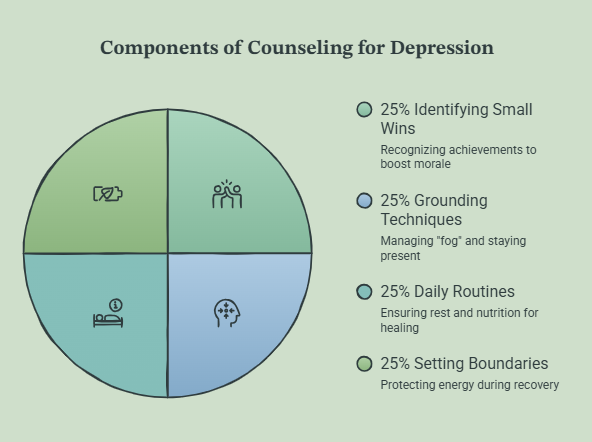
We work on identifying "small wins" that help you feel a sense of accomplishment even on your hardest days.
I teach you grounding techniques to help manage the "fog" and keep you present in the moment.
We look at your daily routines to ensure you are getting the rest and nutrition your brain needs to heal.
We practice setting healthy boundaries so you can protect your limited energy while you are recovering.
With this, you start to see that you have some control over how you feel, which is the direct opposite of the helplessness that depression often creates.
The Connection Between Worry and Sadness
It is very common for people to experience both a low mood and high levels of stress at the same time. If you are constantly on edge, your brain eventually burns out, which leads to that heavy feeling of exhaustion. When we explore what the best treatment for anxiety is, we often find that the two conditions are two sides of the same coin. Addressing your fears can often lift the weight of your depression.
National Institute of Mental Health says evidence-based approaches are the most effective way to reach full remission. That’s why in my work, I use several clinical methods to ensure you see progress.
While I value the insights gained through talk therapy, I also incorporate specialized techniques like Accelerated Resolution Therapy (ART). This type of depression therapy helps clear the heavy images and sensations that contribute to your sadness. It is about clearing the path so your natural energy and motivation can finally return.
Frequently Asked Questions
What type of counseling is best for depression?
Cognitive Behavioral Therapy (CBT) and Interpersonal Therapy (IPT) are widely considered the most effective for long-term recovery. Many clients also find that specialized reprocessing therapies like ART help clear the emotional "heaviness" that traditional talk methods might miss.
What are 5 coping skills for depression?
Effective skills include behavioral activation (doing small tasks), maintaining a consistent sleep schedule, practicing mindfulness to stay present, reaching out to at least one safe person daily, and utilizing "opposite action" (doing the opposite of what the low mood is telling you to do).
How much does counseling for depression cost?
The investment for counseling for depression varies depending on the length of sessions and your insurance coverage. I provide a clear fee schedule during our initial consultation so you can plan for your care with complete transparency.
What are the 5 R's of depression?
The 5 R's are clinical milestones used to track progress: Response (initial improvement), Remission (absence of symptoms), Recovery (sustained remission for several months), Relapse (return of symptoms before recovery), and Recurrence (a new episode after full recovery).
How long does it take for depression therapy to work?
Many people begin to feel a slight lift in their mood within the first few weeks as they start to use new coping tools. However, a deep and lasting change typically happens over several months of consistent work as we address the underlying causes.
You Don't Have to Stay Stuck
Depression makes everything feel permanent and hopeless, but that's the illness talking, not reality. Effective counseling for depression can help you feel like yourself again, not through willpower or positive thinking, but through evidence-based approaches that address what's actually maintaining your symptoms.
Turner Counseling LLC offers specialized depression therapy using approaches proven to work. Whether you're experiencing your first depressive episode or managing recurrent depression, we'll create a treatment plan that addresses your specific needs and helps you rebuild the life depression has taken from you.