If you’ve never been to therapy before, the idea of talking about painful experiences can feel intimidating. You might wonder, how does trauma therapy work if the past cannot be changed.
Trauma therapy is not simply conversation. It is a structured, evidence-based trauma treatment process that helps your brain reprocess overwhelming experiences so they no longer feel current.
The goal is not to erase memory. It is to reduce the emotional and physical charge attached to it. When done correctly, therapy feels steady, contained, and purposeful rather than overwhelming.
The Brain Science Behind Why Therapy Works
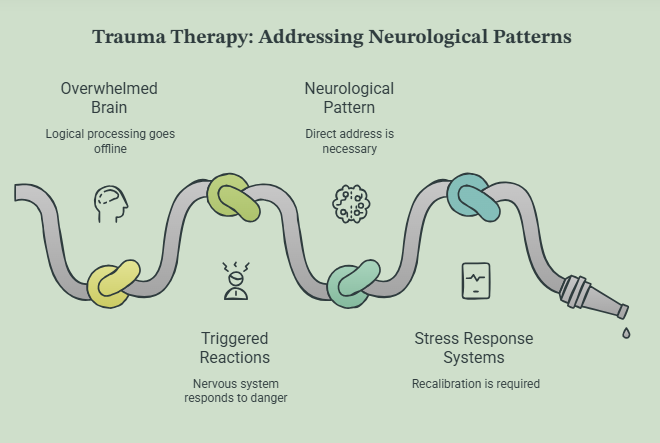
Traumatic experiences are stored differently than ordinary memories. During overwhelming events, the brain’s alarm system becomes highly active while the logical processing system goes offline. The memory is encoded as an active threat rather than a completed event.
This is why reminders trigger intense reactions. Your nervous system responds as if danger is happening again.
Effective trauma therapy techniques directly address this neurological pattern. Through guided processing, the brain updates the memory so it becomes something that happened in the past, not something still unfolding.
Research from the National Institute of Mental Health explains how trauma impacts stress response systems and why structured treatment is necessary for recalibration. Knowing this makes the answer to how trauma therapy works less mysterious. It works by helping your nervous system stand down.
Phase One: Stabilization Comes First
Contrary to popular belief, therapy does not begin with retelling your worst memories.
The first stage of the trauma treatment process focuses on building safety and regulation. This foundation prevents emotional flooding and supports long-term progress.
In early sessions, we focus on:
Recognizing triggers and early warning signs
Learning grounding and breathing techniques
Building emotional regulation skills
Establishing trust within the therapeutic relationship
These trauma therapy techniques may seem simple, but they are critical. Without them, deeper processing can overwhelm rather than heal.
At Turner Counseling LLC, this stabilization phase is central within structured trauma therapy, ensuring each client moves at a manageable pace.
Phase Two: Processing the Memory
Once stability is established, we begin carefully approaching the traumatic material.
This phase answers the question many people ask repeatedly: how does trauma therapy work when you actually face the memory?
Different approaches may be used depending on your needs. These can include:
ART (Accelerated Resolution Therapy)
Cognitive Processing Therapy
Somatic-based interventions
Exposure-based strategies
Each method is part of a broader trauma treatment process designed to reduce emotional intensity while reshaping beliefs formed during trauma.
The memory itself does not disappear. What changes is your body’s reaction and the meaning attached to it.
If you are curious about how various models differ, exploring the different types of trauma therapy can clarify why treatment is not one-size-fits-all.
Phase Three: Integration Into Daily Life
Processing alone is not the end of therapy.
Integration focuses on applying change in everyday situations. You begin responding differently in relationships, conflict, and stress.
This stage often includes:
Practicing healthier boundaries
Challenging lingering negative beliefs
Increasing tolerance for positive emotions
Rebuilding trust in yourself
Clients often notice subtle but powerful shifts. Triggers feel less overwhelming. Reactions slow down. The sense of being “stuck” begins to ease.
This is where the impact of the trauma treatment process becomes visible in real life.
What a Typical Session Feels Like
Knowing how does trauma therapy work also means knowing what actually happens in a session.
You begin with a brief check-in about your week. We assess emotional stability and identify any recent triggers. If you are in the processing phase, we focus on a targeted memory or belief using structured trauma therapy techniques.
Throughout the session, your nervous system is monitored. If activation rises too high, we pause and regulate. You remain present and in control.
Sessions always end with grounding. You do not leave in a heightened state.
How to Know You Have Made Progress
You might ask, when does progress actually happen in therapy? Well, healing rarely feels dramatic. It unfolds gradually. You may notice:
Less emotional reactivity
Fewer intrusive thoughts
Improved sleep
More stable relationships
Increased sense of agency
Some sessions feel lighter. Others feel heavy. Temporary discomfort does not mean therapy is failing. It often signals that deeper layers are surfacing.
If meaningful progress does not occur after sustained effort, adjustments in approach can help. The structure of the trauma treatment process allows flexibility without abandoning evidence-based methods.
Frequently Asked Questions
What happens during trauma therapy?
Sessions begin with stabilization and skill-building. Once safety is established, specific trauma therapy techniques are used to process memories and reshape beliefs. Each session ends with grounding to ensure emotional stability.
What are the 7 major traumas?
There is no official list of seven major traumas. Common categories include physical abuse, emotional abuse, sexual abuse, neglect, loss, accidents, and exposure to violence. Trauma is defined by impact, not category.
How to deal with unresolved trauma?
Start with grounding skills and supportive relationships. Structured trauma therapy provides guided processing that helps integrate distressing memories safely and effectively.
How do people cope with trauma?
Coping may include avoidance, emotional numbing, overworking, or substance use. Healthier coping develops through regulation skills, connection, and evidence-based therapy.
Is trauma therapy effective?
Research supports structured approaches like ART and trauma-focused CBT as effective treatments for trauma-related symptoms when delivered by trained clinicians.
Starting the Process
Now that you have a clearer understanding of how does trauma therapy work, the process may feel less intimidating. Trauma therapy is structured. It is intentional. It follows research-backed steps that prioritize safety and integration.
You do not need to relive everything at once. You do not need to be fully ready. You only need a starting point.
Turner Counseling LLC provides trauma-informed therapy using evidence-based methods tailored to your experiences. If you are ready to begin the healing process, you can contact Turner Counseling to take the first step.