How Often Should You Go to Therapy? Finding the Right Schedule for You
Starting therapy brings up practical questions that nobody really prepares you for. One of the most common: how often should you go to therapy to actually see results?
The answer isn't as straightforward as you might hope because therapy frequency depends on what you're working on, how intense your symptoms are, and what your life can realistically accommodate.
Knowing the reasoning behind different schedules can help you make an informed choice that balances clinical effectiveness with practical sustainability.
The Standard Weekly Model (And Why It Works)
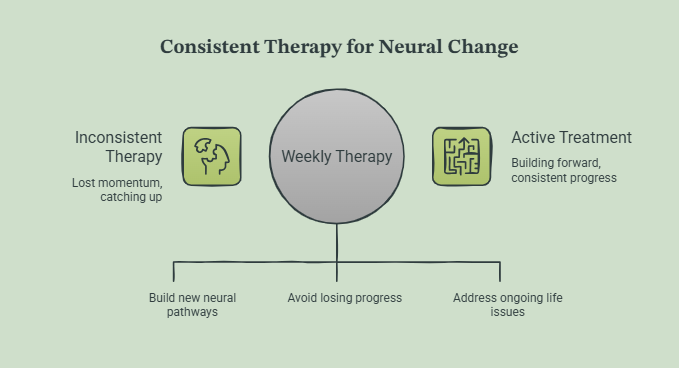
Most therapists default to recommending weekly therapy, and there's solid reasoning behind this. Your brain needs consistent reinforcement to build new neural pathways and change established patterns. When sessions are too far apart, you lose momentum and spend each appointment catching up rather than building forward.
Think of it like learning a language. One lesson per week allows you to practice between sessions, retain what you learned, and progressively build skills. One lesson per month means you're constantly relearning basics instead of advancing.
Weekly sessions work best for:
Active treatment of anxiety, depression, or trauma
Learning and practicing new coping skills
Processing ongoing relationship or life challenges
Building therapeutic momentum during the initial treatment phase
Moderate to severe symptoms that need consistent monitoring
For most people dealing with moderate symptoms or working through specific issues, weekly therapy provides the consistency needed for steady progress without overwhelming your schedule or budget. The rhythm creates accountability and keeps the work fresh in your mind between appointments.
When You Need More (Or Less) Frequent Sessions
Some situations call for adjusting the standard weekly model. If you're in crisis, experiencing severe symptoms, or working through acute trauma, twice-weekly sessions might be recommended. The increased therapy frequency provides crucial support during your most vulnerable time and accelerates processing work that benefits from momentum.
I've worked with clients who came in twice per week during particularly difficult periods—immediately after a traumatic event, during a severe depressive episode, or while navigating a major life disruption. As symptoms stabilized, we transitioned back to weekly or even less frequent appointments.
More intensive frequency (2-3 times weekly) makes sense when:
You're in active crisis and need closer monitoring
You're doing intensive trauma processing
You're experiencing severe symptoms requiring more support than weekly check-ins
You're working with a time-sensitive issue
Stepping down to biweekly sessions works when:
You've built solid skills and need less frequent check-ins
Your symptoms have significantly decreased
You want to test independence while maintaining a safety net
You're maintaining gains rather than actively working through acute issues
Monthly maintenance sessions suit people who:
Have completed intensive work and want ongoing support
Need periodic processing of challenges as they arise
Want to maintain the therapeutic relationship as a resource
Have stabilized and developed reliable self-management skills
The key is being honest about whether reduced frequency reflects genuine progress or avoidance. Sometimes people want to space out sessions because therapy feels hard, not because they've actually built the skills to manage independently.
Matching Frequency to Your Specific Situation
Different mental health concerns often require different therapy frequencies for optimal results. Your therapy treatment plan should reflect what research shows works best for your particular situation.
| Mental Health Concern | Recommended Frequency | Why This Frequency Works |
|---|---|---|
| Trauma Work | Weekly during processing; decreases after core memories are processed. | Nervous system needs regular support for difficult material; interrupting momentum makes processing harder. |
| Depression Treatment | Weekly initially; transitions to biweekly, then monthly as mood stabilizes. | Allows for symptom monitoring and consistent support; prevents relapse from reducing frequency too quickly. |
| Anxiety Disorders | Weekly initially; decreases once techniques are internalized and symptoms drop. | Consistent reinforcement helps newly learned coping skills become automatic. |
| Relationship / Couples Therapy | Weekly when actively working through conflicts or communication patterns. | Regular engagement is required for everyone involved to maintain progress and accountability. |
Your therapist's recommendation about how often should you go to therapy isn't arbitrary. It's based on clinical assessment of your symptoms, risk factors, and what research shows about effective treatment. That said, the best therapy frequency is one you can actually maintain.
The Practical Reality Check for Your Therapy
While clinical recommendations matter, practical realities shape what's actually sustainable. Budget constraints are real. If weekly therapy means you can only afford two months of treatment, but biweekly sessions allow six months of consistent work, the latter might produce better outcomes despite lower therapy frequency.
Consider these practical factors:
Financial sustainability over time (consistent biweekly often beats sporadic weekly)
Your work schedule and ability to attend regularly
Childcare or transportation logistics
Your personality and how you engage with structure and accountability
Whether you have the capacity to practice skills independently between sessions
Be honest with your therapist about practical constraints. A good therapist will work with you to find a sustainable frequency, possibly adjusting the therapy treatment plan to accommodate less frequent sessions or helping you identify resources that make more frequent care possible.
Before making decisions based purely on budget or schedule, though, explore whether resources exist to make more frequent therapy possible if it's genuinely needed. Sliding scale fees, insurance benefits, or temporary adjustments to other expenses might create space for intensive support when you need it most.
So, How Often Should You Go to Therapy?
The beautiful thing about therapy is that frequency isn't set in stone. Your schedule should adapt as your life and needs change. You might start weekly, move to biweekly as you stabilize, drop to monthly for maintenance, then bump back up to weekly when you hit a rough patch.
I've had clients who maintained monthly sessions for years, checking in regularly and deepening their self-understanding. When a crisis hit- a job loss, a relationship ending, a family emergency- they temporarily increased to weekly sessions until they stabilized again. This flexible approach meant they had established therapeutic support exactly when they needed it most.
Life isn't linear, and neither is mental health. The therapy frequency that serves you in January might not be what you need in July. Regular discussions with your therapist about whether the current schedule is working help ensure you're getting what you need without committing to more than necessary.
Making the most of whatever frequency you choose also matters. Knowing how to prepare for therapy sessions helps you maximize the time you do have, whether that's weekly or monthly appointments.
Therapy Frequency FAQs
How often does the average person go to therapy?
Most people find that meeting once a week is the most effective way to begin. This allows for enough time to build a relationship with the therapist and see meaningful progress on specific goals.
What is the 2-year rule for therapists?
This often refers to the ethical guideline regarding the length of time a therapist must wait after ending the professional relationship before having any other type of contact with a former client. It is designed to protect the boundaries and safety of the client.
What is the 3 3 3 rule in therapy?
This is a grounding technique used to manage anxiety. You look around and name three things you see, three things you hear, and move three parts of your body. It is a tool I often teach clients to use between their scheduled sessions.
How often should therapy be to be effective?
Effectiveness is highly personal, but research generally supports that consistent, weekly sessions lead to faster and more durable results. Once you have reached your initial goals, moving to a less frequent schedule can help maintain those gains.
Can I go to therapy too much?
While rare, it is possible to become overly dependent on your therapist. The goal of our work is to empower you to handle your life with confidence. We will always monitor your progress to ensure you are moving toward independence.
Find Your Right Rhythm in Therapy
Figuring out how often you should go to therapy isn't about following a universal rule. It's about honestly assessing your current needs, available resources, and what you can sustain while making genuine progress.
Start with your therapist's clinical recommendation, then factor in practical realities. Be willing to adjust frequency as your situation changes. And remember that some therapy is almost always better than no therapy, if weekly sessions aren't feasible, biweekly work still provides meaningful support.
Turner Counseling LLC works with clients to establish therapy schedules that balance clinical effectiveness with real-world sustainability. Whether you need intensive weekly therapy or periodic check-ins, we'll create a therapy treatment plan that matches your current needs and adjusts as you progress.