I remember sitting in my own therapist's waiting room for the first time, feeling a mix of hope and sheer nerves. It takes a lot of strength to admit that you want things to be different, and learning how to prepare for therapy session goals can help quiet that initial anxiety.
You don't need to have all your thoughts perfectly organized or your history summarized in a tidy timeline. My goal is to make our time together feel like a collaborative partnership where you can be your authentic self while we work toward the joy you deserve.
Lowering the Barrier to Clinical Care
It is completely normal to feel a bit unsteady when you are preparing for counseling. Many people worry that they won't know what to say or that their problems aren't "big enough" to justify a professional’s time. I want to reassure you that there is no right or wrong way to show up for your first therapy appointment.
We will walk through your concerns together at a pace that feels safe and manageable. Taking a few moments to think about what you want to achieve can help you feel more grounded before we even begin our conversation.
I find that the most productive sessions happen when you allow yourself to be honest about where you are today. If you are wondering how often should you go to therapy for steady progress, we will discuss that during our initial meeting.
We will look at your current life stressors and your personal goals to find a rhythm that supports your healing without overwhelming your schedule. My role is to listen and offer a clinical perspective that helps you see your strengths more clearly.
A Practical Therapy Checklist for Your Visit
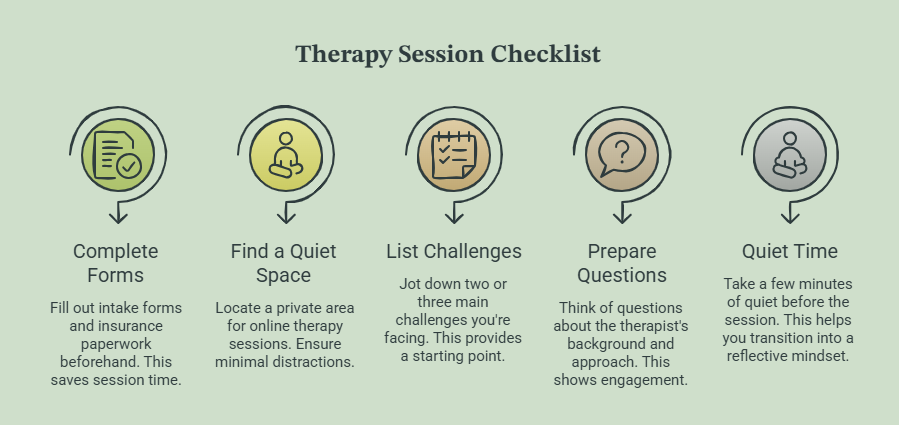
While you don't need to over-prepare, having a few things ready can help you feel more in control of the experience. I find that when clients handle the logistical side of things ahead of time, they can focus more deeply on the emotional work during our hour together. If you are wondering how to prepare for therapy session logistics, here is a simple therapy checklist to follow:
Complete any intake forms or insurance paperwork before your scheduled time so we don't have to use our session for administration.
Find a quiet, private space if you are exploring how does online therapy work for your specific needs.
Write down two or three main challenges that have been on your mind lately so we have a starting point for our talk.
Think about any questions you have regarding my clinical background or my approach to trauma and anxiety.
Allow yourself a few minutes of quiet before the session to transition from your busy day into a more reflective mindset.
This therapy checklist is just a tool to help you feel ready. If you forget everything on the list, we will still have a productive and meaningful session. The most important thing you can bring to your first therapy appointment is your willingness to be present and open.
Identifying Your Intentions for Growth
I believe that therapy is most effective when it is driven by your personal values. When thinking about how to prepare for therapy session topics, try to identify what "feeling better" actually looks like for you. Does it mean sleeping through the night without intrusive thoughts? Does it mean having the courage to set a boundary with a family member?
According to the American Psychological Association, being clear about your goals helps your therapist provide the most targeted and effective care possible.
If you are looking into individual therapy in Minnesota, you might be seeking relief from long-standing patterns of anxiety or depression. We will work together to create a plan that addresses these concerns using evidence-based methods.
I am here to help you untangle the knots of the past so you can move forward with a sense of purpose and agency. You are the expert on your life, and I am the expert on the clinical tools that can help you thrive.
Bringing Your Spiritual Values into the Room
For many of my clients, their faith is the lens through which they see the entire world. I believe that preparing for counseling should include space for your spiritual identity if that is important to you. I find that when we include your relationship with God in our work, the healing process often feels more authentic and complete.
We can explore how your spiritual beliefs provide a foundation of hope during difficult seasons.
I welcome you to share any faith-related concerns or questions that are impacting your mental health.
I offer a space where we can integrate prayer and scriptural truths into our clinical sessions if you desire.
We can look at how your emotional growth supports your spiritual growth and your ability to connect with your community.
Final Thoughts on Preparing for Counseling
The best advice I can give on how to prepare for therapy session visits is to be kind to yourself throughout the process. It is okay if you feel emotional or if you don’t have all the answers right away.
Therapy is a process of discovery, and I am honored to walk with you through every step. We will find the tools that work for your specific needs and build a future where you feel more at home in your own skin.
Therapy Preparation FAQs
What should you do before a therapy session?
Try to spend five or ten minutes in a quiet space to center yourself. It helps to review any "homework" or insights from our previous session and identify one specific thing you want to focus on during our current hour.
What is a red flag for a therapist?
A significant red flag is if you feel judged, ignored, or if the therapist frequently makes the session about their own experiences. You should feel professionally respected and humanly met in every interaction.
How long is a therapy session?
A standard clinical session typically lasts between 50 and 60 minutes. This provides enough time to dive into the important work of the day while ensuring we can wrap up in a way that leaves you feeling regulated.
What to bring up during the first therapy session?
You should feel free to discuss your current symptoms, any past experiences that still feel "heavy," and what you hope to achieve. It is also a great time to ask about the therapist's methods and clinical specializations.
How do I know if I’m ready for therapy?
You are ready when you feel that your current ways of coping are no longer working. If you want a more joyful life and are willing to be honest about your struggles, you are ready to begin.
Take the Next Step with Turner Counseling LLC
You have already taken the hardest step by deciding to seek support. I am ready to provide the clinical expertise and the heart-centered care you need to make the most of our time together.
If you are still wondering exactly how to begin, I invite you to reach out for a free 30-minute consultation. We can talk about your goals and ensure that my approach is the right fit for your unique story. Contact Turner Counseling LLC today to start your journey toward peace and wholeness.